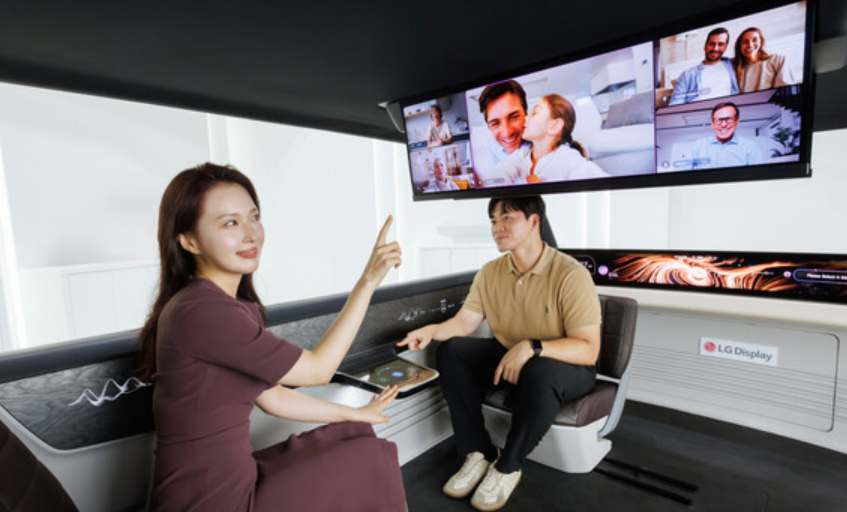
The future of display technology unfolds as a data-driven trajectory toward higher resolution, brighter panels, and tighter color calibration. Measurements across devices will guide scalable clarity and perceptual accuracy, with quantum dots and advanced materials anchoring precise color spaces. AI-enabled energy optimization and privacy-preserving rendering will balance power use with performance. From phones to AR/VR, adaptive visuals promise richer depth and contrast, yet the next crucial question remains: how will users shape and respond to this emerging spectrum?
What the Future of Display Technology Really Means
The future of display technology represents a convergence of resolution, brightness, and interactivity that will redefine how information is perceived and processed.
In this frame, objective measurements guide potential, while creative autonomy expands with data-informed anticipation.
Future telemetry tracks performance across devices, and quantum dots enable precise color calibration, enabling scalable clarity.
This trajectory offers freedom through measurable, transparent, and transformative display ecosystems.
From Pixels to Perception: Advancements Driving Clarity and Color
From the groundwork laid by the broad convergence of resolution, brightness, and interactivity, the path from pixels to perception centers on how precise imaging translates into tangible visual experience. In this frame, ultra contrast and quantum dot technologies enable richer color spaces, sharper delineation, and perceptual depth, guiding designers toward immersive, data-informed displays that redefine perception while preserving freedom in creative interpretation.
Smart Screens and Energy Efficiency: AI, Materials, and Efficiency
Smart screens are evolving through a convergence of artificial intelligence, advanced materials, and optimized energy profiles, enabling displays that adapt in real time to content, environment, and user behavior.
This trajectory envisions AI energy optimization and materials efficiency shaping sustainable brightness, latency, and color fidelity, with data-driven models guiding dynamic power budgets while respecting privacy, autonomy, and freedom in immersive, responsive viewing landscapes.
Use Cases: How Next-Gen Displays Transform Phones, Laptops, and AR/VR
Across phones, laptops, and AR/VR headsets, next-gen displays are poised to reframe interaction through adaptive resolution, instantaneous color fidelity, and content-aware brightness that aligns with ambient context, user intent, and workload patterns.
Portable displays enable light, flexible formats, while Wearable panels expand ubicomp utility, combining eye-tracking, haptics, and context-aware rendering for immersive, freedom-loving workflows and data-driven decision making.
Frequently Asked Questions
What About Cost and Accessibility for New Displays?
Cost trends project gradual affordability improvements as production scales; market access expands through modular, common interfaces. The analysis envisions wide adoption, data-driven estimations guiding policy and investment, empowering individuals to freely choose displays across diverse ecosystems.
How Durable Are Future Display Technologies?
Durability varies by application, with durability challenges shaping design; future displays leverage flexible materials and self-healing substrates. Projections indicate robust but adaptive form factors, data-driven resilience metrics, and a premium for safer, corrosion-resistant, modular configurations.
Will Displays Require More Power or Less in the Future?
Displays will demand less power in the future, driven by power efficiency gains and adaptive processing, while energy use declines through smarter materials, dynamic refreshes, and ambient sensing, enabling a visionary, data-driven trajectory for freedom-loving audiences.
Are There Health or Safety Concerns With New Screens?
Bright as a beacon, health risks and eye safety remain manageable through standards and monitoring. The vision is data-driven, speculative yet practical, empowering freedom lovers to demand transparent tests, continuous exposure tracking, and safer materials across evolving screens.
When Will Mainstream Devices Adopt These Advancements?
Mainstream adoption timelines vary, with accelerated trajectories as display latency declines and color volume expands; projections suggest broader integration within 5–10 years, driven by data-driven improvements, consumer demand for freedom, and cross‑industry standardization.
Conclusion
In the hush of a dimly lit room, pixels awaken like constellations rearranged for human gaze. Data threads weave brightness, color, and depth into a single, seamless fabric, where telemetry tunes every frame. AI guards power as a quiet attendant, while quantum-calibrated hues promise truer skies and richer shadows. Across devices, screens become living canvases—adaptive, anticipatory, intimate—transforming perception into a shared, immersive forecast where imagination and measurement converge.
